
Film Friday - March 6th, 2026. Eastman Kodak Kodacolor 200 Film Review
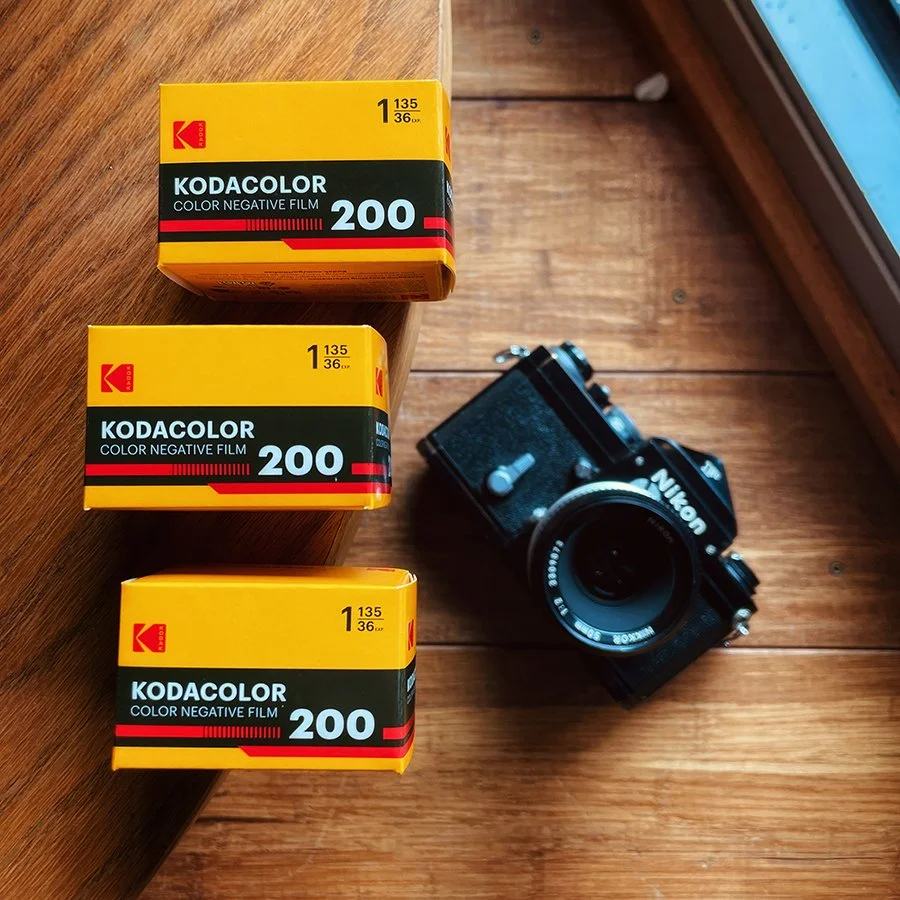
Writing a Film Friday review of Eastman Kodak’s Kodacolor 200 feels like catching up with an old friend, one you know well from a shared past but have fallen out of touch with for one reason or another. Perhaps it is the classic package design of the box the film comes in, or maybe it is the immediate familiarity of its color palette. Whatever the case, Kodacolor 200 is a film we are excited to rekindle our relationship with, so let’s get to it.
We need to start by addressing a certain elephant in the room. Is this film really just Kodak (Alaris) Colorplus wearing a new suit? Depending on when you are reading this, some context might be handy. In early 2025 pretty much all Kodak film, still photography film at least, was distributed to market by a company called Kodak. This was Kodak Alaris, to be exact. But what many film photographers didn’t realize is that Kodak Alaris did not actually make their film. That was done by a different Kodak company: Eastman Kodak. If your head is already starting to spin from whiplash, we don’t blame you. We suggest hitting the Wikipedia page for Kodak Alaris to get a better understanding. Suffice it to say that there were two Kodak companies that this point, Eastman and Alaris. Eastman Kodak made the film, sold it to Kodak Alaris and Alaris then sold it to all of us. This arrangement has been in place for many years now. But at some point in 2025 Eastman Kodak decided to sell the film they were making direct to market. They announced two introductory products: Kodacolor 100 and Kodacolor 200. They have since released Eastman Kodak Gold, Ultramax, Tri-X, Ektachrome E100 and Ektar. Maybe by the time you are reading this we also have Eastman Kodak Portra and TMax.
From the beginning there was rampant speculation that Kodacolor 100 was the same film as Pro Image while Kodacolor 200 was actually Colorplus. It doesn’t take Sherlock Holmes to connect these dots after all. For their part Eastman Kodak has steadfastly refused to confirm that the Kodacolor films are Pro Image and Colorplus. This might be for branding-related legal reasons, it might be because they simply cannot for other reasons. It might even be that they aren’t exactly the same films after all. Since the release of these two films many folks have done side by side comparisons to try and suss out the truth of the mystery. Some claim that when shot side by side Kodacolor 200 and Colorplus have a slightly different look, with the former being a bit more neutral in color and the latter a tad warmer. Others say this is hogwash and there are too many variables that could account for these subtle differences.
For our part we are a bit agnostic of it all. Perhaps they are exactly the same film with a different box. Perhaps it is the same emulsion but on a slightly different film base (a distinct possibility). Perhaps they even have similar but differently tweaked emulsions. We can think of Kodacolor 200 and Colorplus as basically the same thing without really caring if they are exactly the same film. After all, does it matter at the end of the whether the roll in your camera says Colorplus or Kodacolor 200? Not really. We may associate the name of a film with certain qualities and characteristics but ultimately it is those qualities we are after, not the name. So from here on we are going to operate as if Kodacolor 200 is its own thing and treat it as such.
Let’s get to it.

Is there a better Blue Moon Camera staffer to put you in the frame of mind for a film review than Beau? We didn’t think so either.
Eastman Kodak Kodacolor 200 is an ISO 200 color negative film available only in 35mm. It is considered a consumer-grade film, meaning it focuses on being budget-friendly and relatively inexpensive, while eschewing some of the more advanced film technologies that professional films enjoy. Typically it means consumer films like Kodacolor 200 are a bit more grainy, maybe not as high of resolution, perhaps with a bit less latitude or flexibility. But it can also mean they are a great bang-for-the-buck film. Kodacolor 200 is definitely this.
In a nutshell, we would say that Kodacolor 200 has a lovely color palette that has a fair bit of nostalgia to it. It is like Kodacolor 200 is a branch off the Kodak Gold tree. To take this metaphor a little farther, that Gold tree kept growing up and up to new heights while the Kodacolor branch grew out but not up. This means that Kodacolor 200 bears strong resemblance to Kodak Gold, but moreso to the Kodak Gold of 10, maybe 20, years ago. Color is always going to be subjective, and it is easy to convince ourselves of what we see, but Kodacolor 200 feels like a classic instead of modern color film. It has pretty good saturation and pop to it and it does tend a bit toward a warmer color cast, especially depending on how it is scanned. Here, let’s take a look at a couple more sample images.

Kodacolor 200 can produce clean images with bright colors. There is a touch of warmth here that can be seen in the concrete pad out the window, but otherwise blends into the overall color palette of this scene quite nicely. Image made with an Olympus Stylus.
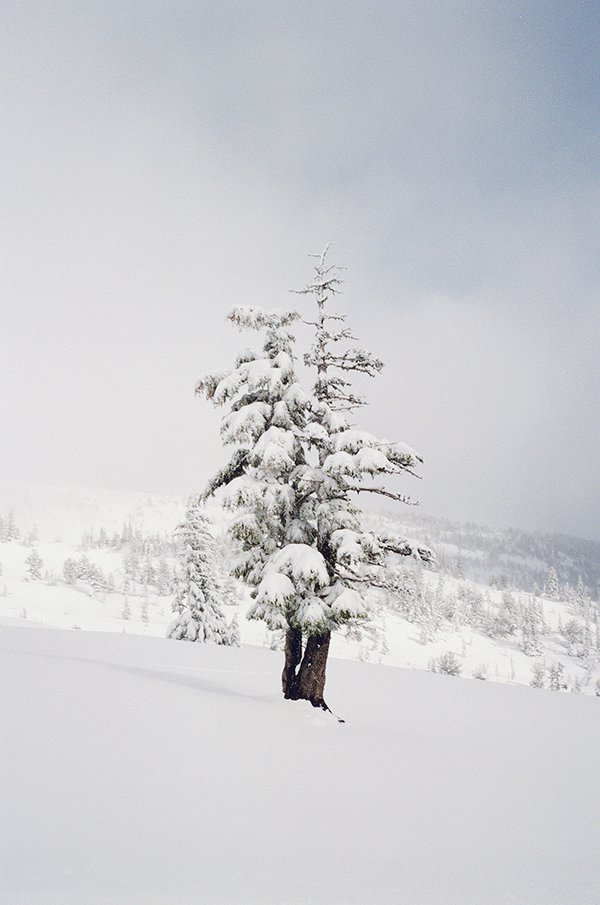
Speaking of clean and bright. Kodacolor 200 really surprised us with this image. The snow came out pretty clean and neutral and the grain (that trust us is there) is not readily visible. Image made with an Olympus Stylus.

And here you can definitely see Kodacolor 200’s tendency to lean a bit yellow… though this is more likely due to how film scanners see this film and correct it initially. Image made with a Nikon FM3A.
The above sample images show off Kodacolor 200’s nice, poppy colors. They also demonstrate the decent latitude this film has as seen in varying ways across all three images, from shooting directly into the sun (bottom image, to backlit subjects (top image) or even nearly all white snowy scenes (middle image). This film seems to be pretty forgiving with exposure and gives the user the benefit of the doubt. This is a helpful trait to have in a consumer film that likely will spend a lot of time in compact cameras or other more automatically-exposing camera models.
Eastman Kodak’s literature does claim that Kodacolor 200 is fine grained with sharp detail. But then again it seems like you read this about every film. It can feel a bit like driving by that new restaurant advertising “great food”, as if they would claim anything other than that. We would say that Kodacolor 200 has fairly average grain. It is an ISO 200 film, so it is bound to have more grain than slower ISO 100 films. It is also a consumer film so it stands to reason that it is going to be grainier than Kodak Portra 160, which has Kodak’s advanced film grain technology. To us, Kodacolor 200 film grain feels pretty normal. There isn’t much here to write home about good or bad. It is certainly noticeable grain and that will become even more so if you make enlargements out of this film. But if all you are doing is posting images to social media you are apt to not really take much notice of it, and if you do, you will probably find it an appealing part of the image structure. It gives it that “old school film look”, right?

The grain of Kodacolor 200 can be seen in the sky in this image. The film has pretty standard grain and is about on par with Kodak Gold 200 or Colorplus 200.
As weird as it may be coming from us, that is kind of all we have to say about Kodacolor 200. If we were to boil this film down to one word, it would be: standard. But we do not mean that in a negative way. Kodacolor 200 is a pretty standard color film. It is also an incredibly affordable color film. Those two things together make Kodacolor 200 great to always have. This is a solid all-purpose film emulsion. Yes, it has its nuances. Its color palette is rich and warm, carrying with it a nostalgia of color films past. Its grain is noticeable but not overbearing, which also helps cement the classic feel to this film. Its colors are saturated enough for landscapes but not too much so for portraiture. In short, if you need a color film to throw in that new camera, or your plane tickets cut into your vacation film budget, this is a solid film to turn to.
We just wish it was also available in 120.

Is Kodacolor 200 the new cool kid’s film? Maybe so. Image made with a Nikon FM3A.

Speaking of the cool kids. Image made with a Nikon FM3A.

Kodacolor 200 even performed well under mixed artificial lighting. Image made with a Nikon FM3A.

Kodacolor 200 is certainly a great walkabout film. And again performing well under direct sunlight. Image made with an Olympus Stylus.

We opened with a Blue Moon Camera staffer and so we shall close with one. Arthur says, “Buy more film”. Image made with a Nikon FM3A.